Search

Popular Posts

Showing posts with label alternative tech/science. Show all posts

Thursday, February 21, 2013

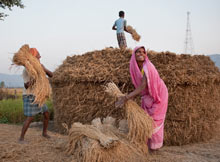
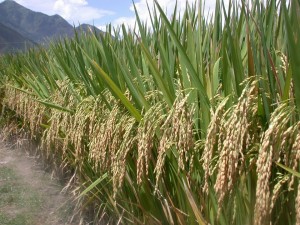
India's Rice Revolution

Click here to read the full article from John Vidal at The Observer


"It is a set of ideas, the absolute opposite to the first green revolution [of the 60s] which said that you had to change the genes and the soil nutrients to improve yields. That came at a tremendous ecological cost," says Uphoff. "Agriculture in the 21st century must be practised differently. Land and water resources are becoming scarcer, of poorer quality, or less reliable. Climatic conditions are in many places more adverse. SRI offers millions of disadvantaged households far better opportunities. Nobody is benefiting from this except the farmers; there are no patents, royalties or licensing fees."

For 40 years now, says Uphoff, science has been obsessed with improving seeds and using artificial fertilisers: "It's been genes, genes, genes. There has never been talk of managing crops. Corporations say 'we will breed you a better plant' and breeders work hard to get 5-10% increase in yields. We have tried to make agriculture an industrial enterprise and have forgotten its biological roots".

Thursday, January 24, 2013

Obama's Climate Challenge


"I think the president understands the climate crisis intellectually, but he has not had the 'holy shit' moment you arrive at when you think about this deeply enough," says a leading climate advocate who has had private conversations with Obama about global warming. Instead of talking about the risks of climate change during the campaign, Obama touted an "all of the above" energy plan that was a soft-porn version of "drill, baby, drill." Under Obama, in fact, oil and gas production have soared: Last year, U.S. oil production grew by 766,000 barrels a day, the largest jump ever, and domestic oil production is at its highest level in 15 years.

Obama, who prides himself on his pragmatism and willingness to compromise, may also be ill-suited to address such an urgent and unyielding crisis – especially because it would mean taking on the climate-denying Republican majority in the House. "Climate is the toughest issue to get any cooperation from Republicans on," says Podesta. In fact, House Republicans see climate change as a wedge issue, the atmospheric equivalent to abortion, which allows them to collect mountains of cash from oil-industry magnates like the Koch brothers while painting themselves as defenders of free enterprise.

"You can't continue with business as usual and pretend you are dealing with the problem," says former Sen. Tim Wirth, who now heads the United Nations Foundation. "It requires a fundamental realignment of how you think about everything, from national security to agriculture to economic investment. Climate change is not one of those issues you can deal with in a few tactical moves."


Sunday, December 30, 2012

Welcome to Saudi Albany?


Most observers would agree, though, that changes in regulation do not come from objective scientific studies. (Both sides, after all, can flood any government hearing with experts and impressive-looking scientific reports.) Regulations are determined, in large part, by politics. And the politics of fracking are changing and are very likely to change drastically in coming years. As examples from the last century suggest, the sudden discovery of oil and gas can transform an entire economy and regulatory system to serve the industry’s interests. Economists call this the resource curse — the perverse process in which a valuable discovery like oil, gas, diamonds or gold ends up enriching a few at the cost of impoverishing most of the population. At its worst, the resource curse leads to deeply corrupt regimes like those in Iraq, Iran, Myanmar and Libya. At its mildest, this can create one-industry economies in which there is little innovation and even less resistance to the whims of a handful of powerful interests. Many believe this already describes the oil economies of Louisiana, Texas and Oklahoma and, increasingly, North Dakota, where the fracking industry is entrenched. Politically and economically, it’s hard to argue with an industry that has helped keep the state’s unemployment rate at about 3 percent.

If there is an uneasy equilibrium, right now, between environmentally concerned citizens and pro-fracking industrial groups, what will the political balance be like in a decade? What pressures will be on state legislatures and regulators if the projections are true and the millions of workers in Pennsylvania, Ohio, West Virginia and maybe New York will owe their jobs to fracking. There will be trillions of dollars of new wealth. Will environmental and health concerns have any chance against that juggernaut?

Wednesday, December 19, 2012

How Millions of Farmers are Advancing Agriculture For Themselves

Click here to read the full article from Jonathan Latham at Independent Science News


The world record yield for paddy rice production is not held by an agricultural research station or by a large-scale farmer from the United States, but by Sumant Kumar who has a farm of just two hectares in Darveshpura village in the state of Bihar in Northern India. His record yield of 22.4 tons per hectare, from a one-acre plot, was achieved with what is known as the System of Rice Intensification (SRI). To put his achievement in perspective, the average paddy yield worldwide is about 4 tons per hectare. Even with the use of fertilizer, average yields are usually not more than 8 tons.

Sumant Kumar’s success was not a fluke. Four of his neighbors, using SRI methods, and all for the first time, matched or exceeded the previous world record from China, 19 tons per hectare. Moreover, they used only modest amounts of inorganic fertilizer and did not need chemical crop protection.

Sunday, November 25, 2012

In the Book Bag, More Garden Tools


Click here to read the full article from Lisa W. Foderaro at The New York Times

Across New York City, gardens and miniature farms — whether on rooftops or at ground level — are joining smart boards and digital darkrooms as must-have teaching tools. They are being used in subjects as varied as science, art, mathematics and social studies. In the past two years, the number of school-based gardens registered with the city jumped to 232, from 40, according to GreenThumb, a division of the parks department that provides schools with technical support.

But few of them come with the credential of the 2,400-square-foot garden at Avenue B and Fifth Street in the East Village, on top of a red-brick building that houses three public schools: the Earth School, Public School 64 and Tompkins Square Middle School. Michael Arad, the architect who designed the National September 11 Memorial in Lower Manhattan, was a driving force behind the garden, called the Fifth Street Farm.

The idea took shape four years ago among parents and teachers, when Mr. Arad’s son was still a student at the Earth School. The family has since moved from the neighborhood to Queens, but Mr. Arad, president of a nonprofit corporation that oversaw the garden, stayed on. The farm, with dozens of plants ranging from leeks to lemon balm, opened Oct. 19. Already, students have learned about bulbs and tubers, soil science and nutrition, while the cafeteria has cooked up fresh kale and spinach for lunch.

Mr. Arad said a conversation with his two children during an apple-picking trip spurred his interest in the farm. “They said, ‘What? Apples grow on trees?’ ” he recalled. “A lot of kids don’t get to go upstate. This is 365 days a year. It gives them an immediate, visceral connection to nature.”

Thursday, November 22, 2012

Solar Companies Seek Ways to Build an Oasis of Electricity


Click here to read the full article from Diane Cardwell at the New York Times

Here’s a $70,000 system sitting idle,” said Ed Antonio, who lives in the Rockaways in Queens and has watched his 42 panels as well as those on several other houses in the area go unused since the power went out Oct. 29. “That’s a lot of power sitting. Just sitting.”

Yet there are ways to tap solar energy when the grid goes down, whether by adding batteries to a home system or using the kinds of independent solar generators that have been cropping up in areas hard-hit by the storm.

In the Rockaways, where nearly 14,000 customers still had no power as of Monday morning, volunteers set up a makeshift solar charging station between a car roof and a shopping cart. A multipanel, battery-tied system is helping fuel a relief center’s operations.

In the storm’s wake, solar companies have been donating equipment across New York and other stricken areas to function as emergency power systems now and backups in the longer term. It is important, executives say, to create smaller, more decentralized ways of generating and storing electricity to help ease strain on the grid in times of high demand or failure."

Monday, November 12, 2012

What Matters About California's GE Labeling Fight


"Whether or not all of this means that the food movement is past the pimply stage of early adolescence, the fact is that California’s labeling fight broadened and emboldened this movement’s power base just as we are heading into a series of regulatory fights over new GE crops in the pipeline, and preparing for what looks like a spring 2013 re-authorization battle over the now-expired Food and Farm Bill.

If the fiscal cliff and other D.C. distractions succeed in keeping Congress from passing a 2012 Farm Bill in the lame duck session despite our insistence that they get off their duffs, then the very same sustainable food and farming forces that gathered together to push for Prop 37 will turn our attention and newly honed skills to securing the kind of agricultural policy that withdraws governmental support from the system of agriculture embodied by Monsanto. For every additional dollar of funding we win for organic agricultural research, that’s one dollar of public funding that will not be devoted to developing more GE crops that fail to deliver on promises to farmers and the public. And in this Farm Bill fight, we will bring to bear a broader base of power as well as a public disabused of the notion that agricultural biotechnology is the best thing since sliced bread."

Thursday, November 1, 2012

The 8 Most Interesting Ideas to Revolutionize Urban Farms


Click here to see the full photo essay from Lamar Anderson at The Atlantic Cities


"Today, while the Center for Science in the Public Interest was busy coordinating Food Day events across the nation, we got to thinking about all the delicious plants that will have to grow on buildings if our rapidly urbanizing world is to produce enough sustenance for the projected 9.1 billion people who will need access to fresh food by 2050. Could it really be a coincidence that so many of the causes CSPI addresses—healthy eating, hunger, food security, agriculture policy—find some resolution in the promise of agritecture, farmscrapers, and other utopian portmanteaus? We think not!

As the vertical farming trend has taken off in recent years, many architects and designers have begun tackling the question of how to marry agriculture with architecture. Here’s a look at some of our favorite concepts (most of them un-built) for fanciful food-producing pyramids, geodesic domes, flower pods, and insects."

Sunday, October 21, 2012

The Food Movement Today

Two enlivening, enlightening, and challenging articles from the Food issue of the New York Times Magazine

Click here to read "Land of a Billion Vegetables" from Mark Bittman


"But I was also inclined to head to the valley because I know that, for the last century or so, we’ve been exploiting ­­ — almost without limitation — its water, mineral resources, land, air, people and animals. Mark Arax, a writer who lives in Fresno and has chronicled the region’s past and present, offered his opinion while serving me and a dozen others marinated lamb, a terrific recipe from his Armenian family: “This land and its water have gone mostly to the proposition of making a few men very wealthy and consigning generations of others, especially farmworkers, to lives in the dust.” I’d already seen an example of how wealth has been concentrated and captured in the valley: this summer, Campbell’s bought Bolthouse Farms for $1.55 billion. Meanwhile, there are thousands of valley farmworkers who are often victims of wage-theft and (illegally) required to supply their own tools.

So for five days I drove through the southern half of the valley. I wanted to learn as much as I could about the agriculture in America’s produce factory; where thoughtful farmers were leading it; and how — if at all — it might become sustainable."

Click here to read "Is The Food Movement For Real?" from Michael Pollen


"Clearly there is growing sentiment in favor of reforming American agriculture and interest in questions about where our food comes from and how it was produced. And certainly we can see an alternative food economy rising around us: local and organic agriculture is growing far faster than the food market as a whole. But a market and a sentiment are not quite the same thing as a political movement — something capable of frightening politicians and propelling its concerns onto the national agenda.

California’s Proposition 37, which would require that genetically modified (G.M.) foods carry a label, has the potential to do just that — to change the politics of food not just in California but nationally too.
"

Friday, September 7, 2012

Project Aims To Harness The Power Of Waves

Thomas Patterson for The New York Times
A computer-equipped buoy, 103 feet long and ultimately weighing 260 tons, being assembled and tested in Vancouver, Wash.

 From Kirk Johnson at The New York Times

PORTLAND, Ore. — About 15 years ago, this environmentally conscious state with a fir tree on its license plates began pushing the idea of making renewable energy from the ocean waves that bob and swell on the Pacific horizon. But then one of the first test-buoy generators, launched with great fanfare, promptly sank. It was not a good start.

But time and technology turned the page, and now the first commercially licensed grid-connected wave-energy device in the nation, designed by a New Jersey company, Ocean Power Technologies, is in its final weeks of testing before a planned launch in October. The federal permit for up to 10 generators came last month, enough, the company says, to power about 1,000 homes. When engineers are satisfied that everything is ready, a barge will carry the 260-ton pioneer to its anchoring spot about two and a half miles offshore near the city of Reedsport, on the central coast.

“All eyes are on the O.P.T. buoy,” said Jason Busch, the executive director of the Oregon Wave Energy Trust, a nonprofit state-financed group that has spent $10 million in the last six years on scientific wave-energy research and grants, including more than $430,000 to Ocean Power Technologies alone. Making lots of electricity on the buoy and getting it to shore to turn on lights would be great, Mr. Busch said. Riding out the storm-tossed seas through winter? Priceless. “It has to survive,” he said.

Adding to the breath-holding nature of the moment, energy experts and state officials said, is that Oregon is also in the final stages of a long-term coastal mapping and planning project that is aiming to produce, by late this year or early next, a blueprint for where wave energy could be encouraged or discouraged based on potential conflicts with fishing, crabbing and other marine uses.

The project’s leader, Paul Klarin, said wave technology is so new, compared to, say, wind energy, that the designs are like a curiosity shop — all over the place in creative thinking about how to get the energy contained in a wave into a wire in a way that is cost-effective and efficient.

“Some are on the seabed on the ocean floor, some are in the water column, some are sitting on the surface, some project up from the surface into the atmosphere, like wind — many different sizes, many different forms, many different footprints,” said Mr. Klarin, the marine program coordinator at the Oregon Department of Land Conservation and Development. “There’s no one-size-fits-all kind of plan.”

Energy development groups around the world are closely watching what happens here, because success or failure with the first United States commercial license could affect the flow of private investment by bigger companies that have mostly stayed on the shore while smaller entrepreneurs struggled in the surf. Ocean Power Technologies also will be seeking money to build more generators.

“Wave energy is very expensive to develop, and they need to see that there is a potential worldwide,” said António Sarmento, a professor at Lisbon Technical University and the director of the Wave Energy Centre, a private nonprofit group based in Portugal. “In that sense, having the first commercial deployment in the U.S. is very, very positive.”

Here in Oregon, the momentum of research appears to be increasing. Last month, the Northwest National Marine Renewable Energy Center — financed by the United States Department of Energy in collaboration with Oregon State University and the University of Washington — deployed one of the first public wave energy testing systems in the nation, called Ocean Sentinel, about two and a half hours from Portland, in Newport. The first device tested was a half-scale prototype from a New Zealand company.

Fishing industry lobbyists and lawyers worry that a surge of wave energy could repeat what happened when hydroelectricity came to the Pacific Northwest in a big way starting in the 1930s. Builders then did not think through the dense ecological web that nature had devised around the tens of millions of salmon — suddenly blocked from their inland spawning routes — that had over millenniums become a cornerstone species for everything from bears to birds.

“Our greatest concern is that they don’t do what they did with dams — put a lot of them in the ocean and then just stand back and see what happens,” said John Holloway, the secretary of Oregon Anglers, a political action committee for recreational fishing. “We’re advocating a go-slow approach.”

What has not changed is that the Pacific Northwest still has a siren song for wave-energy dreamers in the big, consistent rolling ocean swells that define offshore waters — and make many a boater seasick — from Northern California through Washington State.

“Wave energy is essentially an accumulation of wind energy,” Charles F. Dunleavy, the chief executive at Ocean Power Technologies, said in a telephone interview. In the northern Pacific, he said, consistent winds fuel consistent waves, and the distance they travel in their rolling line creates a huge area of wave energy, or fetch, that a bobbing buoy can capture. Other places with good fetch include some areas off the coasts of Western Europe and South America.

But the project also hinges on squeezing out the tiniest of incremental efficiencies in tapping the waves as they come. On the Ocean Power Technologies buoy, which looks like a giant cannon stuffed with electronics, company engineers pursued an insight that sailors have known in their sea legs since the days of Odysseus: every wave is different.

The onboard computer in each buoy, in communication with an array of small devices called wave riders that float farther out in the ocean, adapts, or “tunes” to each incoming wave, adjusting the way the giant internal shaft rides up and down as the swell passes through. The up-and-down motion of the shaft creates the electricity, which goes to shore through a seabed cable.

In a nod to environmental concerns, the buoy was redesigned to remove all hydraulic fluids, which some critics feared could contaminate the water in the event of an accident; rack-and-pinion gears now drive the mechanics. The three anchoring tethers, said Michael G. Kelly, the vice president of operations at Ocean Power Technologies, were also built to withstand a 100-year storm, but also with enough redundancies that even if two anchors failed the third would be enough to keep the buoy in place.

Sunday, August 26, 2012

The Secret To Solar Power


"If they can, the basic value proposition is this: Say you have been paying your utility, on average, $100 a month. The solar company installs solar panels on your roof, maintains them, monitors them and repairs them for the life of the lease. The output will reduce your utility bill to roughly $20 a month, and you pay around $65 a month to lease the equipment (and the power the equipment produces, along with maintenance). You’re now paying $85 a month total, 15 percent less than you were, the installer has a revenue stream that it can use for cash flow or sell off to an investor and everybody is playing his part in reducing the burning of fossil fuels.

“The most frequent question I get,” Kennedy says, “is: ‘What’s the sting? Where’s the trap?’ ” Lyndon Rive says he still goes to dinner parties, where people know all about SolarCity and what he does, and at the end of his pitch about the solar lease, somebody will say: “So how much does this cost again? What’s the payback period?”

“‘You haven’t heard me!”’ he shouted to me, over the telephone, spelling out his frustration with those kinds of questions. “You get cheaper electricity! Full stop!’"

Thursday, August 23, 2012

New Vrindaban Takes A Step Towards Sustainable Energy


The valley barn in New Vrindaban

From Madhava Smullen at ISKCON News

ISKCON’s West Virginia community New Vrindaban has taken another step towards the self-sufficiency that Srila Prabhupada envisioned for it when it was founded in 1968: the community has installed two brand new solar energy systems this year.

Behind the project is ECOV, a non-profit entity formed in the late 1990s with the special focus of realizing Srila Prabhupada’s instructions on living off the land and the cows.

“One solar system was installed on the roof of the community garden building, across the street from the Radha Vrindabanchandra temple,” says ECOV board member Chaitanya Mangala Dasa. “It was activated in the spring, and produces power for a garden shed and guest center.”

Meanwhile, the other system was installed at the Valley Barn, where the majority of New Vrindaban’s sixty cows and bulls reside, on June 12th. Consisting of 26 panels and measuring 42 feet wide and 10 feet high, it produces power for the barn’s lights and animal care equipment, as well as for ECOV’s offices.

In the first week, the two systems produced 114,000 watts of electricity between them; overall, the garden system produces 3 kilo watts per hour, while the barn system produces 5.2.
Holstein Steer grazing outside New Vrindaban Valley Barn

The systems are not independent from the grid, but instead are designed to feed back into the main grid, which will continue to be available.

Both systems are designed to produce enough electricity for the buildings they’re attached to so as to result in a zero dollar electric bill.

“Solar power is a renewable energy source that can help reduce our carbon footprint,” Chaitanya Mangala says.

The new solar systems are currently in a testing stage, as ECOV staff study how well they perform in West Virginia’s climate—the area only gets 150 days of sun a year.


The information they gather will guide future decisions on whether they install more solar panels or investigate other, more efficient types of renewable resource systems.

Even if solar power is chosen as the main energy source, other systems will be incorporated as well, as New Vrindaban moves towards becoming more and more energy efficient. ECOV staff are currently also looking into wind power and bio gas power, which would be run by extracting methane from cow dung.

“Srila Prabhupada clearly stated forty years ago that the main business for New Vrindaban was to develop the simple village lifestyle with residents dependent upon the land and the cows,” says Chaitanya Mangala. “This matches perfectly with the buzz today about developing local economies and minimizing the distance between production and consumption.”


Srila Prabhupada was also a strong advocate of locally produced products, stating, “Anything grown in the garden, that is hundred times [more] valuable than what is purchased from the market.”

ECOV staff are also working towards this goal, planting their own crops in a small demonstration garden as well as the five-acre Garden of Seven Gates. The aim is for the New Vrindaban community to be able to subsist as much as possible on self-produced vegetables rather than those purchased at the grocery store.

The community is also working towards growing all its own flowers for use in the temple, while ECOV staff have planted two hundred fruit trees and berry bushes on the New Vrindaban property.
Manjari, a Brown Swiss Heifer in the Valley Barn which is being powered by solar panels

“All these activities, along with our recent introduction of solar power, represent practical steps towards lessening our dependence on the fossil fuel based economy, and show by positive example that we’re acting on the important instructions that Prabhupada gave us,” Chaitanya Mangala says.

Sunday, August 12, 2012

Letting The Cloud Watch Over The Farm


From Randall Stross at The New York Times

THE world doesn’t necessarily need the gazillion-and-one games that seem available on smartphones. But it could use more apps and services that address the needs of business people with specialized needs. Like farmers.

FarmLogs, a start-up based in Ann Arbor, Mich., is a one of a few new companies that are making a pitch to farmers. It offers a cloud-based software service — no software is downloaded; only a Web browser is needed — that embodies the latest technology. But in reaching its intended customers, the company must often rely on an old-fashioned medium: in-person selling.

Jesse Vollmar, 23, and Brad Koch, 22, graduated from Saginaw Valley State University last year and were running their own small I.T. consulting company when they decided to try to make easy-to-use software for farms like the one on which Mr. Vollmar grew up in Caro, Mich., about 90 miles northwest of Detroit.

The two received funding from Y Combinator, a seed fund in Mountain View, Calif. During a three-month residency in Silicon Valley last winter, under Y Combinator’s aegis, they worked on farm management software aimed at tracking all of a farmer’s field activities. In one view, a farmer can see rectangular representations of what is planted on each field. A click leads to a log of what was done when on each field: tilling on this date, fertilizing on that date, spraying on another.

With the data stored in one place, it can be combined with information from other sources and used by the farmers. If they need, they can also share it easily with consulting agronomists, crop insurance agents, the Agriculture Department and others.

Nathan Engelhard, an early customer who farms 1,000 acres in Unionville, Mich., says FarmLogs gives him the ability to take his iPad out into the field and make entries himself. “FarmLogs is a money saver,” he says, “because I don’t have to write things down on a scrap of paper and pay someone to sit in an office and enter them into the computer.”

FarmLogs officially opened to customers in June. “We’re trying to reach a community that isn’t all online yet,” Mr. Vollmar says. “We have to use more traditional marketing methods.” FarmLogs declined to say how many people have signed up.

In mid-July, Mr. Vollmar set up a booth at a local county fair. (In the booth to the left was a political candidate; to the right, a psychic.) Farmers who stopped by were receptive, and many signed up for the service, he says. But the local fair drew too few attendees.

FarmLogs reached many more prospects by demonstrating its service at a booth at the much larger Ag Expo at Michigan State University. This annual agricultural trade show drew more than 18,000 visitors last month.

FARMLOGS has spent little on advertising. Print magazines about farming are often found in rural homes, but the company has not yet tested the efficacy of print ads, which Mr. Vollmar says are costly. Instead, experiments with Google ads have produced encouraging results, especially when tied to a search for the phrase “farm management software.”

In a niche like this, the pre-cloud method of software distribution, entailing downloading and installing software on a desktop PC, imposes high initial costs for the customer, but no monthly fees. 

One of FarmLogs’ older competitors, Farm Works Software, for example, sells accounting software for a desktop PC that is designed for farmers and costs $750.

FarmLogs, however, uses the pricing format of software-as-a-service start-up: a free trial, no setup fees, and monthly plans based on the size of operations. Costs range from $9 a month for the smallest farm to $99 a month for farms of more than 2,000 acres.

Farmers’ income arrives unevenly, in big lumps over the course of a year rather than in a steady monthly stream. That could make it hard to persuade farmers who are now using notebooks or spreadsheets for record-keeping to add a new and recurring expense category, software-as-a-service, even if the amount is tiny when compared with annual income.

Another start-up, Farmeron, also provides a cloud-based software service for farm management. It has received funding from 500 Startups, another seed fund based in Mountain View.

But where FarmLogs is for row crops, Farmeron is focused on livestock management. Its monthly charge depends on the number of animals managed by the farm, and by the number of people who use the software. Typically, of the many people who may work on a farm, two or more may need simultaneous access to the same data, which a cloud-based service easily provides.

The mission of another start-up, Solum, is to expand the store of data that farmers use to make decisions. The company has a central office in Mountain View and a soil analysis laboratory in Ames, Iowa.

Founded by three young men who earned Ph.D.’s in applied physics from Stanford, Solum has created new hardware and software technology for soil analysis. It makes a machine for testing soil nitrate levels that is small enough to be kept on the farm, allowing farmers to perform far more tests cost-effectively in a given field, says Nick Koshnick, one of the founders.

“It turns out that there’s huge variability in yield across a field,” Mr. Koshnick says, “The challenge is to figure out what accounts for the variability. Our soil analysis can be used with GPS mapping to help agronomists figure out what fertilizer to put where.”

In essence, Solum and other start-ups are building the technology to allow farmers to benefit from data science.

Solum has raised more than $19 million from investors including the Silicon Valley venture capital firms Khosla Ventures and Andreessen Horowitz.

Had it been around in his day, George Washington might have been quite excited to see a demonstration of Solum’s testing technology. At Mount Vernon, Washington experimented with using muck dredged from the Potomac River as a fertilizer — he would toast, “Success to the mud!” But his method, alas, was hit-or-miss. No GPS, databases or algorithms, and no software-as-a-service at any price.

Randall Stross is an author based in Silicon Valley and a professor of business at San Jose State University. E-mail: stross@nytimes.com.

Sunday, July 22, 2012

Monsanto Lauches Campaign To Stop GMO Labeling


From Lisa Garber at Natural Society

We’ve gone on at great lengths discussing the dangers of genetic modification. Monsanto’s GMO corn has been linked to weight gain and organ function disruption, while GMO crops and pesticides destroy our farmland and environment.  According to the Alliance of Natural Health, the grandchildren of rats fed GMO corn were born sterile. GMO is just one of those things to avoid, but with our own government in bed with Monsanto, it’s not easily done. Monsanto has recently launched a proverbial war against the open labeling of genetically modified foods, and only through activism and awareness can it be overcome.

The People Versus GMO

In February of this year, Vermont contemplated the Right to Know Genetically Engineered Food Act. The proposed bill prohibits GMO food producers from using keywords like “natural,” “naturally made,” “naturally grown,” and “all natural” to describe GMO ingredients and products. In the same month, the National Conference of State Legislatures reported that nearly 20 states were considering similar programs. Public surveys and studies also show a whopping 90 percent of the U.S. in favor of such practices.

In theory, this should make California’s GMO labeling initiative, which would require all foods within the state made with GM ingredients to carry a label stating so, a shoo-in. But let’s not get so hasty.

Leaders in the disinformation campaign launched against the labeling initiative cry out that it would be—like the infamous Proposition 65, “The Safe Drinking Water and Toxic Enforcement Act of 1986”—a way for bounty-hunting trial lawyers to file suits against even natural food companies for supposedly selling products containing undisclosed GMOs.  Of course, GMO’s ally StopCostlyFoodLabeling.com receives funding from the Council for Biotechnology Information. It should be no surprise that the likes of Monsanto and Dow count themselves members of the said organization.

More Efficient than Prop 65

James C. Cooper, PhD in economics from Emory University, dismisses the comparison between California’s initiative and Proposition 65. In his report, he delineates the key differences between the two programs:
  • The Label GMO initiative allows producers 7 years to reduce GMO exposure of products from under 5 percent to zero.
  • Producers are immune from suit if they can provide a statement from their supplier or an independent organization that the food is certified organic and/or GMO-free.
  • Producers have 30 days to rectify violations with no liability.
  • Whereas plaintiffs keep “bounties” of 25 percent of civil penalties in Prop 65, the labeling initiative provides none.
It hasn’t been long since the Food and Drug Administration deleted 1 million signatures and comments from the “Just Label It” campaign calling for the labeling of GM foods, even after 55 politicians offered support for the initiative. It only shows that the fight against GMOs won’t be easy (or cheap).

Still, it’s worth fighting.

Additional Sources:
Alliance of Natural Health US
Explore More:
  1. FDA Deletes 1 Million Signatures for GMO Labeling Campaign
  2. Monsanto Admittedly Influences Colorado GMO Ban, Launches Phony ‘GMO Co-Existence’ Protests
  3. Genetically Modified Food Labeling Initiative Gains Momentum
  4. Vermont Introduces Monumental GMO Labeling Legislation
  5. Monsanto Threatens Lawsuit Over GMO Labeling Bill
  6. Congressman, Senators Join Massive Grassroots Initiative to Label GMOs

Friday, July 6, 2012

What If Your Prasadam Is Genetically Modified

Image: momsforsafefood.net
Can eating vegetables with animal genes in them be considered as vegetarian diet?

There is a set of serious questions we must ask ourselves as devotees living in our current time, place, and circumstance: Do we feel comfortable offering foods that have been genetically modified on the altar to our respective Deities? Do we feel comfortable eating these foods ourselves? If these foodstuffs have animal genes in them (which according to Monsanto isn't true, but the potential remains for such a cross-current), would we consider these foods fit for offering or for consumption?

The fact of the matter is that we are already offering and eating many foodstuffs that have been genetically modified. 92% of the soybeans, 86% of the corn, 93% of the canola, and soon a good deal of the alfalfa and rice produced in the United States has been genetically modified in one way or the other. This is an ethical and spiritual dilemma that ISKCON must now consider. Since food is such an important element of our practice and preaching, we must, as individuals and collectively, come to understand the nature of the GMO on what we offer and eat.

I have been reading Acceptable Genes: Religious Traditions and Genetically Modified Foods, a collection of essays edited by scholars Conrad G. Brunk and Harold Coward. In this volume, a number of concerns and questions are raised as to how the phenomenon of GMOs affect the culinary elements of spiritual traditions across the spectrum. As I begin to educate myself more and more on this issue, I hope to keep a level head on the reality of the technology itself.

It is very easy to get caught up in all the potential horror-stories resulting from GMOs run amok, but there are potential benefits to the technology which could increase the efficiency of modern agriculture and help many people who struggle to produce their own food to become more sufficient.

I strongly encourage you to do your own detached and level-headed research, because I am not going to tell you GMOs are right or wrong. I have not decided on it either way myself, but there are potential ethical and spiritual issues we must consider.

I asked my fellow Ayurvedic chef Om Rishikesh what he thought of these questions, and he responded with a natural aversion to the whole idea of genetic modification itself. He feels that we shouldn't be messing with natural processes already perfectly created by Krishna, and he especially wouldn't feel comfortable offering or consuming foods with animal genes inserted into them. This is a common reaction which I also share in my own intuition and which throughout Acceptable Genes many spiritual practitioners also share.

Like many technologies (atomic bombs, cell phones, and hydraulic fracturing come to mind), we have rushed into the use of GMOs without getting a full picture of the potential effects to our own bodies and our collective ecology. The major biotech companies have a reputation of stifling independent research into the effects of the technology, and like it or not, in many ways we are guinea pigs in a large experiment over the development of GMO foods whose effects may not be known for many years.

There are also tremendous ethical concerns surrounding the business side of GMOs and biotech, and many protest against the exploitation that occurs against the small farmer who chooses/or is forced to do business with the industry. When we hear the claim that in India “Monsanto’s GMO Seeds Contributing to Farmer Suicides Every 30 Minutes”, obviously our moral and compassionate radar should go on high-alert. We've had more than enough experience that corporate interests often come before human interests, and in the case of such a high-powered industry as biotech, we should be especially vigilant as to the human cost.

Another facet of the debate is whether GMO foods should be labeled. The biotech industry is against labeling because they feel the average customer won't buy foods that have been modified. Many consumers are quite concerned over this, and in California a citizen initiative (“The Right To Know Genetically Engineered Food Act”) could this election season legally require such labeling in that state.

Let me take this back to the level of our devotion. When we offer food on our altar, we hope that the offering is made up of the very best we can give, from the physical nature of the food itself to the love for Krishna that we are developing in our consciousness.

We are, or we should be, very particular about where we got the food, how we cooked it, and how we presented it. We may have a tendency to not be as educated as we should be as to where our food is coming from, and to what might be in it. I am guilty of this as anyone, for the supermarket has captured our conditioning for convenience, often at the expense of our conscience.

In Acceptable Genes, distinguished scholar Vasudha Narayanan approaches the question of GMOs as it relates to Hindu ritual/offering in her essay “A Hundred Autumns To Flourish”. Her approach is generally liberal, leaving open the potential reality that GMOs may have many positive social benefits, and that across the Hindu diaspora there is enough flexibility also to comfortably incorporate GMO foods into one's daily diet.

When it comes to the question of the formal ritual of offering food, she reasons that for most Hindus, the question of the purity of the food being offered would override any convenience or potential benefit of its being genetically modified, especially in terms of inclusion of animal genes. She writes:

"The hot button for many Hindus would be the introduction of what is regarded as animal genes into vegetables, fruits, or grains. If the origin, however remote, is an animal, then the modified food would be considered “impure.

But it is not just animals; we cannot even put traits of onions or garlic into other food, because the modified food then become impure and unfit for ritual use. Similarly, genes from a grain into fruit would be troublesome to those Hindus who fast on some days and abstain from all grains.
Thus, if GM foods have “impure” genes in them, they would almost definitely be rejected for ritual worship."

I think it is safe to say that we as devotees share these same concerns and would have the same reactions. It is already complex enough for many of us to try and insure the purity of the foods we cook and offer to the Lord, hence the need and responsibility for us to make sure we educate ourselves on this issue.

Above all, I think this dilemma calls out more and more for us to continue to try and fulfill Srila Prabhupada's desires for sustainable rural communities where we can grow our own food. I also think the best solution at hand for the moment, while the many ambiguities surrounding GMOs are hopefully sorted out, is for us as devotees to make commitment to using foodstuffs from our own sustainable communities if possible (check out the awesome CSA from Gita Nagari Yoga Farm if you live nearby), and beyond that to buy and use foodstuffs from certified organic sources.

With the wisdom of our own tradition as well, in relation to the collective ecology we can share, let us try to bring clarity from our own end as to the potential benefits/drawbacks of GMO technology and our food. We want to make sure that what we put into someone's stomach to affect their heart and soul is going to give them the best possible benefits.

Resources:
http://monsantoblog.com/2009/04/13/gmo-vegetables-anima...
http://en.wikipedia.org/wiki/Genetically_modified_food
http://books.google.com/books/about/Acceptable_Genes.ht...
http://organicremix.com/2012/05/yoga-dinning-with-om-ka...
http://dakotatoday.typepad.com/dakotatoday/2009/07/-res...
http://naturalsociety.com/monsantos-gmo-seeds-farmer-su...
http://food52.com/blog/3740_the_controversy_over_gm_foo...
http://www.guardian.co.uk/commentisfree/2012/jun/13/cal...
http://www.theyogafarm.com/p/csa.html#csa-sign-up

Sunday, July 1, 2012

Relief in Every Window, but Global Worry Too

Kuni Takahashi for The New York Times
Growing demand for air-conditioning in developing nations, as here in Mumbai, India, has raised concerns about global warming.


In the ramshackle apartment blocks and sooty concrete homes that line the dusty roads of urban India, there is a new status symbol on proud display. An air-conditioner has become a sign of middle-class status in developing nations, a must-have dowry item.

It is cheaper than a car, and arguably more life-changing in steamy regions, where cooling can make it easier for a child to study or a worker to sleep.

But as air-conditioners sprout from windows and storefronts across the world, scientists are becoming increasingly alarmed about the impact of the gases on which they run. All are potent agents of global warming.

Air-conditioning sales are growing 20 percent a year in China and India, as middle classes grow, units become more affordable and temperatures rise with climate change. The potential cooling demands of upwardly mobile Mumbai, India, alone have been estimated to be a quarter of those of the United States.

Air-conditioning gases are regulated primarily though a 1987 treaty called the Montreal Protocol, created to protect the ozone layer. It has reduced damage to that vital shield, which blocks cancer-causing ultraviolet rays, by mandating the use of progressively more benign gases. The oldest CFC coolants, which are highly damaging to the ozone layer, have been largely eliminated from use; and the newest ones, used widely in industrialized nations, have little or no effect on it.

But these gases have an impact the ozone treaty largely ignores. Pound for pound, they contribute to global warming thousands of times more than does carbon dioxide, the standard greenhouse gas.

Thursday, June 7, 2012

Monsanto And The American Way

An ear of corn is never just an ear of corn when it is grown from a Monsanto seed…” Anonymous

From John Bain at GoodBusiness International


For the past few weeks here at Good-B we’ve been talking about genetically modified foods. What are they? Why are they? And are they good for you or not?

In this field there is no company more lauded – and suspect – for its achievements than agricultural juggernaut Monsanto. 
We’ve invited this company into our homes – and make no mistake, you have eaten Monsanto today – without questioning their motives or thinking much of it at all. Why?

In researching this topic, I became increasingly aware of the stupefying depths of this company’s involvement in American life. I decided that to write about Monsanto is not so much to pen a clear-cut narrative of ever-increasing genetic tinkering, stock prices, or protest. The conglomerate doesn’t even fit into the familiar (to conspiracy theorists) metaphor of the “octopus” – tendrils everywhere, with a nefarious head plotting at the top.

No – and I hope you’ll forgive the aquatic word-wrangling while I get to the point – it’s best understood as a jellyfish. The thing about a jellyfish is that, because it’s composed mostly of saline water, we can’t tell exactly where it ends and the ocean begins.

See where I’m going here? Monsanto’s control over this country’s food isn’t an abuse of the system, as it stands – it is the system. It is so much a basic part of our food system, you don’t even think about it.

Corn is in pretty much everything these days. And this isn’t just a matter of muffins – I’m thinking more along the lines of corn-syrup sweetener in soda and candy, corn starch in chicken nuggets, even corn in your gas tank in the form of ethanol. And Monsanto is the corn cartel behind all of this, controlling 80 percent of corn seeds (not to mention 90 percent of soybeans) in this country and feeling free to raise prices whenever they feel like it.

How is this possible/legal? Not to suggest anything untoward, but this site has a list of Congressmen that Monsanto has given campaign contributions to. According to this source, they’ve spent over $50 million on lobbying to keep their genetically modified crops on the right side of the law. That puts them right up there with the oil industry, which has a similar effect on U.S. policy.

Did I mention that G.H.W. Bush-appointed Supreme Court justice Clarence Thomas has Monsanto ties and refused to recuse himself from a case involving their GMO patents? Like I said, these tendrils run deep.

In fact, Monsanto’s rise to absolute power has everything to do with the Bush dynasty. Consider that Donald Rumsfeld was president of a company now owned by Monsanto, and that John Ashcroft was the top recipient of Monsanto money in the government when he was made attorney general. They’re also well-represented in the CIA. It’s no surprise, then, that they’re pushing farmers in Iraq and Afghanistan to use their GMO seeds.

Individuals with Monsanto ties were also conspicuous in the Bush-era FDA. They still work there, which perhaps has something to do with the current lack of progress on a proposal to label all GMO food.

Through the “revolving door” of Monsanto employees being recruited by the FDA, the company and its cronies literally decide most major U.S. food policy decisions. They even possess the capability to intervene in U.S. foreign policy, as revealed by a diplomatic cable from 2007 made public by WikiLeaks. This cable describes efforts by the U.S. ambassador to France to put pressure on that country after they banned Monsanto’s GMO corn. It is incredible –and palpably wrong – that one company has so much control over what this nation’s government does or does not do.

At the present moment Monsanto exercises nearly complete control over the food policy of the U.S. This control is further enabled by the patent system, which allows organisms to be trademarked; thus, Monsanto literally owns most of the corn in this country in the same way the RIAA owns most of the music.

Now, my objection here isn’t a moral one. Humans have been playing God with genetic material for centuries. Those who tinker with genetic material have the right to copyright it, just as an author has the right to copyright his novel. The problem I have with Monsanto is that what they’re doing is anti-competition; they’re in the halls of government precisely to cripple the kind of honest capitalism this country was founded on.

For purposes of illustration, let’s consider the case of OSGATA, an organization of organic farmers that filed suit against Monsanto last March.

OSGATA filed suit in response to Monsanto’s tactic of suing any farmer who is found with seeds from their GMO crops in his or her field. In many cases, OSGATA claims there was no willful infringement; rather, seeds and pollen naturally drifted from Monsanto-supplied fields to these farmers’ organic plots.

One perspective on this case is that Monsanto is simply trying to bankrupt the competition, using the drift of their GMO seeds as easy cover. That’s the view I’m inclined to.

In February of this year, the judge presiding over the case deemed the accusations of the plaintiff OSGATA to be without legal merit. The suit was dismissed.

This March, they appealed, with one plaintiff saying the Federal Court was “obsequious to Monsanto”. I’m anxiously awaiting any news on the progress of this case, but my hopes aren’t very high.

Still, the OSGATA case is only one of a series of events that shows people are waking up. Another would be the California ballot initiative to start labeling GMO food, or even more pointedly last year’s S.E.C. investigation of a Monsanto program that gave cash incentives to farmers who used their GMO seeds.

But those are the people who grow our food, the niche California “granola lobby”, and the Securities Exchange Commission, respectively. They all have direct reasons to be involved, and that isn’t enough.


After all, President Obama promised to introduce a GMO-labeling bill during the 2008 campaign. That’s failed to materialize as of yet, but I think Mr. Obama is the kind of politician who holds his cards close to his chest. Monsanto has a huge amount of clout in Washington, and without the clear support of the people any attempt to fight the GMO lobby would be very politically hazardous for him.

In other words, it’s our problem.  Right now a movement is growing. But I think it’s very likely that there’s nascent support for the anti-GMO cause in the hearts of many. Most just have blinders on, unable to see the Monsanto system for what it really is – and what it is is a racket, an anti-democratic and anti-competitive institution. What’s up to those of us in the know is to inform, to agitate, and to hope we strike a chord.

Call to Action: Gary Hirschfield of Stonyfield Yogurt and many other “pure food” activists have started a movement for freedom of choice in our food system called “Just Labels.” The key issue is that we should know what is in our food and have a choice over whether we want to consumer it or not.  Join the movement as we did at Good-b at http://www.justlabelit.org/

Click here as well for info on how 5 million farmers are also suing Monsanto for unjust economic practices.

Sunday, May 27, 2012

Battle Brewing Over Labeling of Genetically Modified Food


Ilana Panich-Linsman for The New York Times
Using her own stickers, Cynthia LaPier surreptitiously labels foods that she knows contain genetically modified organisms.


GREAT BARRINGTON, Mass. — On a recent sunny morning at the Big Y grocery here, Cynthia LaPier parked her cart in the cereal aisle. With a glance over her shoulder and a quick check of the ingredients, she plastered several boxes with hand-designed stickers from a roll in her purse. “Warning,” they read. “May Contain GMO’s (Genetically Modified Organisms).”

For more than a decade, almost all processed foods in the United States — cereals, snack foods, salad dressings — have contained ingredients from plants whose DNA was manipulated in a laboratory. Regulators and many scientists say these pose no danger. But as Americans ask more pointed questions about what they are eating, popular suspicions about the health and environmental effects of biotechnology are fueling a movement to require that food from genetically modified crops be labeled, if not eliminated.

Labeling bills have been proposed in more than a dozen states over the last year, and an appeal to the Food and Drug Administration last fall to mandate labels nationally drew more than a million signatures. There is an iPhone app: ShopNoGMO.

The most closely watched labeling effort is a proposed ballot initiative in California that cleared a crucial hurdle this month, setting the stage for a probable November vote that could influence not just food packaging but the future of American agriculture.

Tens of millions of dollars are expected to be spent on the election showdown. It pits consumer groups and the organic food industry, both of which support mandatory labeling, against more conventional farmers, agricultural biotechnology companies like Monsanto and many of the nation’s best-known food brands like Kellogg’s and Kraft.

The heightened stakes have added fuel to a long-simmering debate over the merits of genetically engineered crops, which many scientists and farmers believe could be useful in meeting the world’s rapidly expanding food needs.

Supporters of labeling argue that consumers have a right to know when food has been modified with genes from another species, which they say is fundamentally different from the selective breeding process used in nearly all crops.

Almost all the corn and soybeans grown in the United States now contain DNA derived from bacteria. The foreign gene makes the soybeans resistant to an herbicide used in weed control, and causes the corn to produce its own insecticide.

“It just makes me nervous when you take genetic matter from something else that wouldn’t have been done in nature and put it into food,” said Ms. LaPier, 44, a mental health counselor whose guerrilla labeling was inspired by the group Label It Yourself. She worries that her daughter, 5, could one day suffer ill effects like allergies.

The F.D.A. has said that labeling is generally not necessary because the genetic modification does not materially change the food.

Farmers, food and biotech companies and scientists say that labels might lead consumers to reject genetically modified food — and the technology that created it — without understanding its environmental and economic benefits. A national science advisory organization in 2010 termed those benefits “substantial,” noting that existing biotech crops have for years let farmers spray fewer or less harmful chemicals, though the emergence of resistant weeds and insects threatens to blunt that effect.

In a letter circulating on social networks, one Iowa farmer, Tim Burrack, criticized this month’s O, the Oprah Magazine, which cited research linking genetic engineering to health concerns that many scientists have discredited and proposed “5 Ways to Lessen Your Exposure to GMO’s.” Mr. Burrack urged Ms. Winfrey not to “demonize GM crops.”

But some food experts argue that food manufacturers have an obligation to label. Consumers “have a right to take genetic modification into consideration,” said Marion Nestle, a professor of nutrition, food studies and public health at New York University. “And if the companies think consumer objections are stupid and irrational, they should explain the benefits of their products.”

Until now, Americans have made little fuss about genetically modified crops on the market compared with Europeans, who require that such foods be labeled. Demonstrators in Britain are threatening to destroy some genetically modified wheat being grown in a research trial near London.

The current push for labeling in this country stems in part from a broadening of the genetically modified menu to include herbicide-resistant alfalfa and the possible approval this year of a fast-growing salmon, which would be the first genetically engineered animal in the food supply.
Gary Hirshberg, chairman of Stonyfield Farms, the organic yogurt company, has raised more than $1 million for the Just Label It campaign to influence the F.D.A. after fighting approval of engineered alfalfa, arguing that cross-pollination would contaminate organic crops fed to cows.

“This is an issue of transparency, truth and trust in the food system,” Mr. Hirshberg said.

Biotechnology companies say that the California labeling initiative, while portrayed as promoting consumer choice, is really an effort by some consumer and environmental groups and organic food growers to drive genetically modified foods off the market.

“These folks are trying to use politics to do what they can’t accomplish at the supermarket, which is increase market share,” said Cathleen Enright, an executive vice president at the Biotechnology Industry Organization, which represents Monsanto and DuPont.

Rather than label food with what consumers might regard as a skull and crossbones, the companies say food producers may ultimately switch to ingredients that are not genetically modified, as they did in Europe.

If the California initiative passes, “we will be on our way to getting GE-tainted foods out of our nation’s food supply for good,” Ronnie Cummins, director of the Organic Consumers Association, wrote in an letter in March seeking donations for the California ballot initiative. “If a company like Kellogg’s has to print a label stating that their famous Corn Flakes have been genetically engineered, it will be the kiss of death for their iconic brand in California — the eighth-largest economy in the world — and everywhere else.”

The Grocery Manufacturers Association, which represents major food brands, declined to comment on what members would do if the California measure passed. But Rick Tolman, chief executive of the National Corn Growers Association, said after meeting with food executives this month that he had the “strong impression” that they would rather reformulate their ingredients than label their products genetically engineered. “They think a label will undermine their brand,” he said.

When asked if they wanted genetically engineered foods to be labeled, about 9 in 10 Americans said that they did, according to a 2010 Thomson Reuters-NPR poll.

The current call for transparency has resonated among some Americans upset by reports of BPA (a chemical used in plastics) in food packaging and pink slime (an ammonia-treated additive) in meat. Ms. LaPier has made an effort to label Kashi cereals, which advertise themselves as natural, since learning they contain genetically modified soy. Since discovering the Label It Yourself Facebook page in March, she has added several of her own pictures to its gallery of handmade labels on grocery store shelves across the nation.

Depending on the jurisdiction, such labeling could constitute a trademark violation against the manufacturer or a trespass against the store. No one has been prosecuted, but also, no one has been caught, according to a spokesman for the group.

So far, the F.D.A. has said only that it is studying the labeling petition; none of the state-level labeling bills proposed over the last year have passed.

For labeling proponents, California, where the Legislature would be bypassed by a direct popular vote, is the big prize.

A decade ago in Oregon, a similar measure that appeared to have the support of two-thirds of voters was rejected after a last-minute spending blitz by labeling opponents. With the financial backing of the organic industry, labeling supporters in California say they will be better prepared.