Search

Popular Posts

Sunday, July 29, 2012

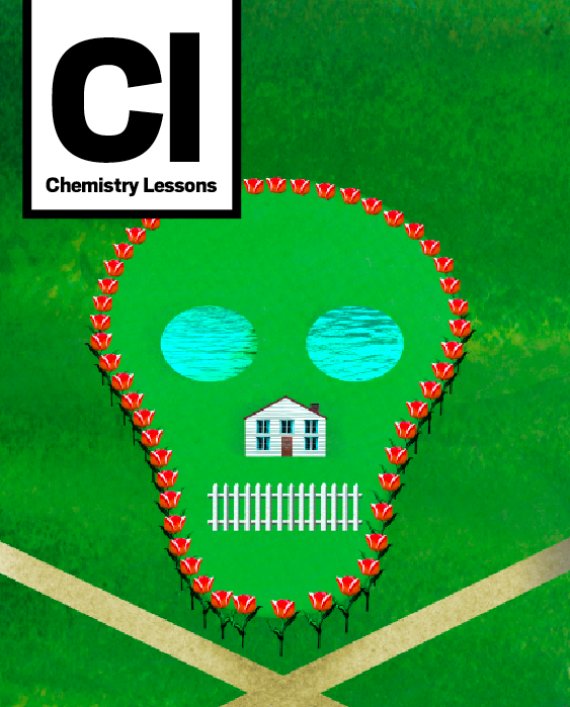
Chemistry Lessons: Living With Rachel Carson's Legacy

chemicals
This story originally appeared in Issue 6 of our new weekly iPad magazine, Huffington, in the iTunes App store.

From Lynne Peeples at The Huffington Post

As you read this, a menagerie of chemical pollutants is coursing through your body. What you do and how you live doesn't matter. You have inhaled them, you've eaten them, you've absorbed them through your skin. You're doing it right now.

If you are an average American, your personal chemical inventory -- embedded in your blood, your breath and your bones -- will include an alphabet soup of phthalates, mercury, perfluorinated compounds, bisphenol A, and assorted chemical flame retardants.

If you are a new mother, you are passing these chemicals to your child through your breast milk. If you are pregnant, you are delivering them through your umbilical cord.

These inescapable realities of modern life -- realities that have vexed environmental advocates and worried scientists for years -- are not new. They were all foreseen, with sometimes chilling accuracy, 50 years ago this summer, when an unassuming marine biologist from Springdale, Penn., named Rachel Carson began publishing a series of articles in The New Yorker Magazine. Carson's essays, which accused the chemical industry of calculated deception and American regulators of wanton disregard for the proliferation of pesticides and other chemical pollutants released into the environment, would ultimately be published as the book "Silent Spring" -- considered by many to be the clarion call of the modern environmental movement.

Today, one study after another repeats the same cautions Carson raised decades ago, including how the tiniest chemical exposures can lead to long-term harm, especially to children.

“We’ve discovered many things that Carson intuitively anticipated, and also some things that she would’ve never imagined,” says John Peterson Myers, CEO and chief scientist at Environmental Health Sciences.

Optimists, Myers included, suggest that, by combining Carson’s prescient insights with modern advancements in biology and chemistry, we can preserve the health of future generations.

In 2010, chronic diseases such as heart disease and cancer surpassed infectious diseases as the leading causes of death across the world, notes Bruce Lanphear, an environmental health expert at Simon Fraser University in British Columbia. “That can be seen as both troubling and an opportunity,” he says, suggesting that we have the potential to eliminate some of the exposures now implicated in chronic diseases. “The problem is that it is really the mega-corporations that are designing, or keeping us from developing, regulatory policies to protect people.”

More than 80,000 chemicals currently used in the U.S. have never been fully tested for their potential to harm humans or the environment, according to the Natural Resources Defense Council.

“Maybe we didn’t heed a warning,” says environmental activist and lawyer Erin Brockovich. “Can we really afford to wait another 50 years?”

To celebrate the 50th anniversary of Silent Spring, Huffington decided to review five of Rachel Carson’s warnings made decades ago to see how they measure up today.

#1: “ Every human being is now subjected to contact with dangerous chemicals, from the moment of conception until death.”

A few years before she was pregnant with her first child, Elsie, Hannah Pingree got tested for toxic chemicals as part of a demonstration study by public health groups.

Although she has lived most of her life on an island 12 miles off the coast of Maine, her blood, hair and urine showed high levels of flame retardants, mercury and phthalates. “I was living nowhere near anything industrial,” says Pingree, former Speaker of the Maine House and now a consultant for “Safer Chemicals, Healthy Families,” a national coalition working to reform toxic chemical regulation. “This was simply from interacting with the environment and in my home.”

Pingree is now pregnant with her second child. As she knows, and as Carson suggested but had no way of proving at the time, exposures to toxic chemicals begin in the womb. Whatever exposures a mother encounters, so too does her future child.

As Carson wrote in The New Yorker on June 30, 1962: toxic chemicals have “entered the environment of almost everyone — even of children as yet unborn.” Within the body of the story, was an ad from the chemical giant Dupont Co. promoting its motto: “Better Things For Better Living … Through Chemistry.”

“Back in mid-century, a lot of people thought that the placenta was a barrier to environmental chemicals,” says Tracey Woodruff, a reproductive health expert at the University of California, San Francisco. It was some 40 years after Silent Spring’s publication when scientists finally confirmed Carson’s hunch — finding nearly 300 different industrial chemicals in samples of umbilical cord blood.

Pingree also knows, as did Carson, that a rapidly developing fetus or child is particularly vulnerable to the effects of those chemical exposures. Childhood cancer may be one tragic consequence. Carson pointed out that “more American school children die of cancer than from any other disease.” A statistic that holds true today.

In many cases, however, the effects of early life exposures don’t appear for decades, and once they do, they’re almost impossible to trace back to their origins, Carson noted. “A child is not going to necessarily wake up with some rash, but they may later have cancer at age 50,” says Pingree. She is less worried about her now 16-month-old’s “daily survival,” and more about the long-term effects of “things like pesticides and the plastic she’s chewing on.”

Still, Myers, the chief scientist at Environmental Health Sciences, points to a “remarkable ray of hope.”

“We’re learning that we actually may be able to prevent chronic diseases of adulthood by reducing exposures in the womb,” he says.

#2: “ Once they were kept in containers marked with skull and crossbones.”


Pingree does everything she can to limit both her and Elsie’s chemical exposures. Like other parents, however, she finds the task frustrating.

“It’s impossible for a parent to live their life trying to make the right decisions about chemicals. There are so many things we don’t know,” says Pingree. “We have this system that allows all of us to have these levels of consumer and industrial chemicals without any idea how they got in there.”

Potentially toxic chemicals are pervasive yet generally invisible — from pajamas treated with flame retardants to bisphenol-A leaching out of plastic bottles to pesticides lingering on fruits.

Parents faced much the same predicament 50 years ago. “Lulled by the soft sell and the hidden persuader,” wrote Carson, “the average citizen is seldom aware of the deadly materials with which he is surrounding himself.”

Manufacturers are rarely required to disclose ingredients in their products, notes Woodruff. And when they do, there are often loopholes such as the requirement that a pesticide label need only include the names of “active” ingredients.

“You can’t know it if you don’t see it,” she says.

Further, disclosures are irrelevant if no tests have been done to identify harmful effects. This is the case for tens of thousands of chemicals common in consumer products. Aside from substances designed to be ingested as food or drug, newly developed commercial chemicals are virtually unregulated in the U.S. — until and unless they are proven harmful.

“The burden of proof in this country is on proving a chemical is dangerous rather than on the side of those who introduce the chemical to prove that it is safe,” says Eric Chivian, director of Harvard Medical School’s Center for Health and the Global Environment. Europe, he notes, has it the other way around.

Carson expressed her own frustration with the U.S. government’s lack of chemical regulation.” If the Bill of Rights contains no guarantee that a citizen shall be secure against lethal poisons distributed either by private individuals or by public officials,” wrote Carson, “it is surely only because our forefathers, despite their considerable wisdom and foresight, could conceive of no such problem.”

Of course, there are also those unintentional ingredients that find their way into products today without anyone’s knowledge. A study published in May suggested that peanut butter can be a source of trace amounts of flame retardants.

“There are always little surprises that we’re finding,” says Woodruff.

#3: “ The chemical war is never won, and all life is caught in its violent crossfire.”

Though women’s nylons were the subject of the 1962 DuPont ad that adorned Carson’s New Yorker article, the company also had a big hand in the pesticide business. In fact, DuPont was a major manufacturer of the prime antagonist in Silent Spring: DDT.

Worry over the widespread aerial spraying of the pesticide inspired Carson to pursue her book.
“Not only forests and cultivated fields are sprayed, but towns and cities as well,” she wrote. “The legend that the herbicides are toxic only to plants and so pose no threat to animal life has been widely disseminated, but unfortunately it is not true.”

While DDT was banned in the U.S. a decade after the publication of her book, and subsequently banned for agricultural use worldwide, Carson’s concerns persist. DDT remains in limited use for the control of mosquito-borne diseases and replacement pesticides now pose their own risks.

Environmental advocates fear widespread poisoning, as well as a continuing arms race with nature that they say humans are destined to lose.

“Evidence of aerial spraying this year in California points to the pesticide treadmill that Carson had acknowledged 50 years ago,” says Paul Towers of the nonprofit Pesticide Action Network.

Mosquito districts in the state are enlisting more toxic chemicals than they had in years past for the control of West Nile Virus due to concerns over pesticide resistance in mosquitoes. Insects that can withstand a spray are more likely to spawn the next generation of pests. And over time, this survival of the fittest can render useless whatever chemical concoction is employed.

Meanwhile, industrial agriculture may soon transition to a genetically-modified corn resistant to two common pesticides, Roundup and 2,4-D, in response to growing resistance among weeds. The result, advocates fear, is the use of stronger doses of the herbicides. Roundup has been shown to disrupt human hormones; 2,4-D was a component of Agent Orange.

Matt Liebman, of Iowa State University, foresees weeds evolving resistance to the new variety of corn within a few years. “Then we’ll be on same treadmill that we’ve been on,” he says.

“Carson was not arguing for banning all pesticides,” notes John Wargo of Yale University, who spent six months going through 117 boxes of Carson’s personal files. “She was simply arguing against the broad-scale prophylactic application that would lead to widespread contamination and exposure. Her arguments follow a train of logic and a narrative that would be extremely useful today.”

#4: “ The contamination of our world is not alone a matter of mass spraying. Indeed, for most of us this is of less importance than the innumerable small-scale exposures to which we are subjected day by day, year after year.”

Earlier this year, the U.S. Centers for Disease Control and Prevention declared that there is no safe level of lead in the bloodstreams of children. Even in tiny amounts, exposures to the heavy metal via dust and flakes of lead paint can damage a child’s developing brain.

Scientists today are also heard stating similarly grim warnings about a growing number of environmental toxins, found in a lengthening list of places.

“People took Carson somewhat seriously in the case of DDT, but she was also talking in very broad terms about chemicals,” says Pingree. Whether from eating a piece of salmon or breathing in second-hand smoke or chemicals sprayed on a lawn, each of our everyday exposures may be tiny, though not necessarily insignificant.

“One part in a million sounds like a very small amount — and so it is,” wrote Carson, referencing a likely amount of pesticide residue on food. “But such substances are so potent that a minute quantity can bring about vast changes in the body.”

Lanphear of Simon Frasier University notes that we are now worrying about even smaller exposures than Carson was suggesting. “Parts per billion,” he says.

Recent research has also questioned the popular notion that “the dose makes the poison.” Minuscule concentrations of chemicals that disrupt hormones — common in industrial pollution, pesticides and plastics — may have potent effects, sometimes even when large doses of the same chemical appear harmless. Some chemicals also can accumulate in the environment and the human body, where they can combine and interact with other chemicals.

“This is why there is no ‘safe’ dose of a carcinogen,” Carson wrote. Carson pointed out one combination of chemicals that had already raised red flags among scientists: malathion mixed with other organophosphate pesticides. Administered together, she wrote, “a massive poisoning results — up to 50 times as severe as would be predicted on the basis of adding together the toxicities of the two.”

Organophosphates, including malathion, are still in use today.

“Things are far more complicated chemically than they were in Carson’s time,” says Wargo. “There are so many uses of many more active ingredients, inert ingredients and differently formulated products that it’s become difficult for governments to identify the risks.”

“We are now living in a world probably beyond what Carson could have ever imagined, in terms of the number of chemicals kids interact with every day,” says Pingree. “And we’re having all the impacts that she worried about.”

#5: “ These injuries to the genetic material are of a kind that may lead to disease in the individual exposed or they may make their effects felt in future generations.”

In other words, if you happen to be obese or infertile, facing cancer or diabetes or any number of other diseases, it might well have something to do with your father’s exposure to a plastic toy in 1955, or even his father’s exposure to his comrades’ chemical-laced second-hand smoke after he successfully stormed the beach at Normandy. Your own children and grandchildren may even pay the price of the ancestral exposures.

Carson hinted at this possible new spin on nature versus nurture 50 years ago, and scientists are only now confirming her suspicions.

“That was a very insightful comment for the time,” says Michael Skinner, a leading expert in an emerging field called epigenetics at Washington State University. “It came long before we had any data, before anything was appreciated about this.”

Studies published over the last couple of months have bolstered the notion that toxic chemicals in our ancestors’ environment could help explain cases of a variety of diseases and cognitive problems that we and our children suffer today — even without exposure to the contaminants ourselves.

“Many behavioral diseases like autism run in families but do not follow normal genetic patterns,” says Skinner. “Our findings really fit the bill.”

Environmental insults don’t necessarily have to alter our genetic code to cause lasting trouble, Skinner and other scientists have discovered. They also can disrupt the body’s ability to interpret these inherited instructions, and in certain cases, this so-called epigenetic defect is handed down and becomes more pronounced in subsequent generations.

A young soldier exposed to Agent Orange in Vietnam, for example, or a kid caught in a drift of DDT insect repellant on his 1950s cul-de-sac, might well pass on health consequences to their children, and then to their children’s children, and so on down the family line.

Myers says that he used to “draw solace” from the belief that environmental contaminants such as plasticizers and flame retardants, now likely linked to conditions such as diabetes and asthma, were not affecting any inheritable information. In other words, if you were to remove the exposure, most people thought that the next generation would be spared.

“This casts a significant shadow of a doubt,” he said, “on that assumption.”

Sunday, July 22, 2012

Monsanto Lauches Campaign To Stop GMO Labeling


From Lisa Garber at Natural Society

We’ve gone on at great lengths discussing the dangers of genetic modification. Monsanto’s GMO corn has been linked to weight gain and organ function disruption, while GMO crops and pesticides destroy our farmland and environment.  According to the Alliance of Natural Health, the grandchildren of rats fed GMO corn were born sterile. GMO is just one of those things to avoid, but with our own government in bed with Monsanto, it’s not easily done. Monsanto has recently launched a proverbial war against the open labeling of genetically modified foods, and only through activism and awareness can it be overcome.

The People Versus GMO

In February of this year, Vermont contemplated the Right to Know Genetically Engineered Food Act. The proposed bill prohibits GMO food producers from using keywords like “natural,” “naturally made,” “naturally grown,” and “all natural” to describe GMO ingredients and products. In the same month, the National Conference of State Legislatures reported that nearly 20 states were considering similar programs. Public surveys and studies also show a whopping 90 percent of the U.S. in favor of such practices.

In theory, this should make California’s GMO labeling initiative, which would require all foods within the state made with GM ingredients to carry a label stating so, a shoo-in. But let’s not get so hasty.

Leaders in the disinformation campaign launched against the labeling initiative cry out that it would be—like the infamous Proposition 65, “The Safe Drinking Water and Toxic Enforcement Act of 1986”—a way for bounty-hunting trial lawyers to file suits against even natural food companies for supposedly selling products containing undisclosed GMOs.  Of course, GMO’s ally StopCostlyFoodLabeling.com receives funding from the Council for Biotechnology Information. It should be no surprise that the likes of Monsanto and Dow count themselves members of the said organization.

More Efficient than Prop 65

James C. Cooper, PhD in economics from Emory University, dismisses the comparison between California’s initiative and Proposition 65. In his report, he delineates the key differences between the two programs:
  • The Label GMO initiative allows producers 7 years to reduce GMO exposure of products from under 5 percent to zero.
  • Producers are immune from suit if they can provide a statement from their supplier or an independent organization that the food is certified organic and/or GMO-free.
  • Producers have 30 days to rectify violations with no liability.
  • Whereas plaintiffs keep “bounties” of 25 percent of civil penalties in Prop 65, the labeling initiative provides none.
It hasn’t been long since the Food and Drug Administration deleted 1 million signatures and comments from the “Just Label It” campaign calling for the labeling of GM foods, even after 55 politicians offered support for the initiative. It only shows that the fight against GMOs won’t be easy (or cheap).

Still, it’s worth fighting.

Additional Sources:
Alliance of Natural Health US
Explore More:
  1. FDA Deletes 1 Million Signatures for GMO Labeling Campaign
  2. Monsanto Admittedly Influences Colorado GMO Ban, Launches Phony ‘GMO Co-Existence’ Protests
  3. Genetically Modified Food Labeling Initiative Gains Momentum
  4. Vermont Introduces Monumental GMO Labeling Legislation
  5. Monsanto Threatens Lawsuit Over GMO Labeling Bill
  6. Congressman, Senators Join Massive Grassroots Initiative to Label GMOs

Thursday, July 19, 2012

The Real Environmental Crisis: Lessons From the Green Patriarch


From Krista Tippett at The Huffington Post

Earlier this month, His All Holiness Bartholomew, the Patriarch of 300 million Eastern Orthodox Christians, convened a two-day conversation on "environment, ethics and innovation." We gathered on the tiny, ancient island of Heybeliada off Istanbul, which was once the Patriarch's Constantinople and before that New Rome.

There were scientists there, and activists, and religious thinkers. Greenpeace was represented, and so was Dow Chemical. We did not solve any problem or draft a white paper or conceive a plan of action. There were no expectations of these things, and so it was not, like the recent Rio conference, roundly condemned as a failure. But our discussion did yield some fresh examination of the often-unnamed obstacle to all the good solutions and plans already out there: the human condition.

The gathering convened in a former seminary, which Ataturk's successors closed as
they secularized Turkey and which the present Islamic government seems poised to re-open. It was poignant, in this space, to hear James Hansen -- the NASA scientist who seminally defined the relationship between atmospheric carbon dioxide and civilization as we know it -- profess that scientists need the help of the religious in an urgent struggle for public understanding.

But really, the problem is something different from understanding. Facts are out there, knowledge is out there, and there are fewer and fewer people alive on any continent who do not have a direct experience of environmental volatility -- whatever their doubt or faith in "climate change." The problem, as the theologian Reinhold Niebuhr famously diagnosed, is that "man is his own most vexing problem." Or, as Patriarch Bartholomew more poetically invoked, "there is a long journey from the head to the heart, and an even longer journey from the heart to the hands."

We circled back to this insight over and over again, with different words and from disparate directions. Jane Goodall spoke of the intelligence that distinguishes humans among species -- our ability to teach our young about things that are not directly tangible, to recall the past, to think and organize into the future. But intelligence alone does not get us where we need to go or even necessarily where we want to go. For that, the human creature must exercise harder-won capacities of wisdom, and wise action.

I went to this conference ready to challenge theologians to more robustly articulate their vision of the relationship between humanity and the natural world. There has been an explosion of new theological thinking and scriptural scholarship across religions and denominations in recent decades, paralleling the explosion in scientific understanding of how the world is changing.

Now I suspect that the most urgent religious contribution to our environmental present may be in the knowledge it holds -- at its best -- about engaging hearts and organizing hands. Before neuroscience and brain imaging, our great religious and spiritual traditions knew that fear and anxiety are sources of suffering, but that we are prone to create more suffering rather than face these. They understood that knowing what is right is not the same as living it. They developed contemplative practices, rituals and communities in which human beings become safe and supported to aspire to their best, for the good of the whole.

The evolutionary biologist David Sloan Wilson has studied religions precisely in this way -- as remarkably successful examples of adaptive groups, practicing for thousands of years what evolutionary biologists are figuring out about the link between environment, values and behavior.

There is altogether a fascinating convergence right now between ancient religious teachings and new science on altruism, forgiveness, empathy. We're understanding how such qualities are triggered physiologically, and how they can be made more likely.

The path Jane Goodall is now following reflects a kindred line of questioning and discernment. As she became aware of the destructive force of human beings on chimpanzee habitats, she simultaneously attended to the human suffering behind it. New conservation initiatives have been realized for the chimpanzees of Gombe, which began with meeting human fear and need. And her program, Roots and Shoots, is yielding practical projects all over the world; it is in essence about emboldening hope and courage in young people paralyzed by the deluge of environmental bad news.

Stonyfield Farms founder Gary Hirshberg is another voice for both profitability and what he calls "restorative commerce." He pays organic farmers generously to put carbon back into their soil and has far poorer gross margins than his commercial competitors -- including Danone, the global food giant that bought a majority stake in Stonyfield Farms a decade ago. But Hirschberg also has higher net margins, a confounding equation that led Danone to leave the business model in his control. He's achieved this in part by eschewing traditional advertising budgets but reaching directly to consumers, one might say, at the head-heart-hands nexus. His paradigm, he said on Heybeliada, is peace of mind. His customers' motivation -- and his own -- is having children.

This is language that reframes behavior, taking our sense of necessary actions out of the realm of guilt and into the realm of deeply desired good. And this is another thing religions have always understood: the power of words, specifically of naming, to make new realities possible. The word "environmentalism" itself segregates the importance of what happens in places like Rio. It makes the work of nurturing and restoring the environment seem the domain of experts and activists. It points away from near universal, life-giving experiences like having children, loving the place one comes from, and discovering courage in the presence of dignity and beauty.

The great question -- beyond Heybeliada and Rio and all the conferences to come -- is how to open environmental and scientific discourse and passions up into the human and civilizational discourse and passions they rightly are. Another scientist who came to Heybeliada, Amory Lovins of the Rocky Mountain Institute, evokes spiritual traditions along with scientific innovation in a virtue he calls "applied hope." How interesting and fitting that the natural world might be the ground that brings science and religion back to a shared sense of purpose after a few hundred years of estrangement.

And what a relief that this could be the story history will tell in the next century, if we survive to see it, rather than the distracting narrative of discord that we privilege at our peril.

Sunday, July 15, 2012

Has ‘Organic’ Been Oversized?


 Click here to read the full article from Stephanie Strom at The New York Times

ANN ARBOR, Mich.

Michael J. Potter is one of the last little big men left in organic food.

More than 40 years ago, Mr. Potter bought into a hippie cafe and “whole earth” grocery here that has since morphed into a major organic foods producer and wholesaler, Eden Foods.

But one morning last May, he hopped on his motorcycle and took off across the Plains to challenge what organic food — or as he might have it, so-called organic food — has become since his tie-dye days in the Haight district of San Francisco.

The fact is, organic food has become a wildly lucrative business for Big Food and a premium-price-means-premium-profit section of the grocery store. The industry’s image — contented cows grazing on the green hills of family-owned farms — is mostly pure fantasy. Or rather, pure marketing. Big Food, it turns out, has spawned what might be called Big Organic.

Bear Naked, Wholesome & Hearty, Kashi: all three and more actually belong to the cereals giant Kellogg. Naked Juice? That would be PepsiCo, of Pepsi and Fritos fame. And behind the pastoral-sounding Walnut Acres, Healthy Valley and Spectrum Organics is none other than Hain Celestial, once affiliated with Heinz, the grand old name in ketchup.

Over the last decade, since federal organic standards have come to the fore, giant agri-food corporations like these and others — Coca-Cola, Cargill, ConAgra, General Mills, Kraft and M&M Mars among them — have gobbled up most of the nation’s organic food industry. Pure, locally produced ingredients from small family farms? Not so much anymore.

All of which riles Mr. Potter, 62. Which is why he took off in late May from here for Albuquerque, where the cardinals of the $30-billion-a-year organic food industry were meeting to decide which ingredients that didn’t exactly sound fresh from the farm should be blessed as allowed ingredients in “organic” products. Ingredients like carrageenan, a seaweed-derived thickener with a somewhat controversial health record. Or synthetic inositol, which is manufactured using chemical processes.
Mr. Potter was allowed to voice his objections to carrageenan for three minutes before the group, the National Organic Standards Board.

“Someone said, ‘Thank you,’ ” Mr. Potter recalls.
And that was that.

Two days later, the board voted 10 to 5 to keep carrageenan on the growing list of nonorganic ingredients that can be used in products with the coveted “certified organic” label. To organic purists like Mr. Potter, it was just another sign that Big Food has co-opted — or perhaps corrupted — the organic food business.

Thursday, July 12, 2012

Small Farmers Creating a New Business Model as Agriculture Goes Local


From Kirk Johnson in The New York Times

SEATTLE — The cultivated rusticity of a farmers’ market, where dirt-dusted beets are status symbols and earnest entrepreneurs preside over chunks of cheese, is a part of weekend life in cities across the nation as the high days of the summer harvest approach.

But beyond the familiar mantras about nutrition or reduced fossil fuel use, the movement toward local food is creating a vibrant new economic laboratory for American agriculture. The result, with its growing army of small-scale local farmers, is as much about dollars as dinner: a reworking of old models about how food gets sold and farms get financed, and who gets dirt under their fingernails doing the work.

“The future is local,” said Narendra Varma, 43, a former manager at Microsoft who invested $2 million of his own money last year in a 58-acre project of small plots and new-farmer training near Portland, Ore. The first four farmers arrived this spring alongside Mr. Varma and his family, aiming to create an economy of scale — tiny players banded in collective organic clout. He had to interrupt a telephone interview to move some goats.

Economists and agriculture experts say the “slow money” movement that inspired Mr. Varma, a way of channeling money into small-scale and organic food operations, along with the aging of the farmer population and steep barriers for young farmers who cannot afford the land for traditional rural agriculture, are only part of the new mix.

A looming shortage of migrant workers, with fewer Mexicans coming north in recent years, could create a kind of rural-urban divide if it continues, with mass-production farms that depend on cheap labor losing some of their price advantages over locally grown food, which tends to be more expensive. From the vineyards of California to the cherry orchards of Oregon, big agriculture has struggled this year to find willing hands. Local farm sales are becoming more stable, predictable and measurable. A study last fall by the Department of Agriculture said that local revenues had been radically undercounted in previous analyses that mainly focused on road stands and markets. When sales to restaurants and stores were factored in, the study said, the local food industry was four times bigger than in any previous count, upward of $4.8 billion.

More predictable revenue streams, especially at a time when so many investments feel risky, are creating a firmer economic argument for local farming that, in years past, was more of a political or lifestyle choice.

“How you make it pay is to get closer to the customer,” said Michael Duffy, a professor of economics at Iowa State University, capsuling the advice he gives to new farmers in the Midwest.

Labor, as it has been for generations in the United States, is still the big wrinkle for local growers. But in many cases, experts like Professor Duffy say, the local food system is increasingly going its own way, differentiated from the traditional labor pool of migrant workers that the United States’ mainstream produce system depends on. Many larger local farms hire Hispanic workers, but at more farm stands and markets, buying local also means, in subtle or not so subtle ways, buying native.

“A byproduct of local food is that local hands are more likely to be producing, harvesting, packing and marketing it, especially for new farmers on small-scale farms,” said Dawn Thilmany McFadden, an agricultural economist at Colorado State University who is part of a leadership team for a training program for beginning farmers.

In other instances, Hispanics who had worked as low-wage laborers are now becoming entrepreneurs. A three-year-old nonprofit group north of Seattle, Viva Farms, specifically aims to help Hispanic farmers get started, with assistance in language training and in understanding the vagaries of the marketplace.

“We work harder now,” said Misael Morales, 35, describing the main difference between life as a farm laborer and as an entrepreneur.

Mr. Morales came to the United States from Oaxaca, Mexico, as a teenager, and last year he and his brother, Salvador, 32, began farming a one-acre plot at Viva Farms. They mainly grow lettuce for markets and restaurants in Seattle.

“Early or late, when something has to get done, you do it,” he said.

Viva Farms’ director of business and organizational development, Ethan Schaffer, said former wage workers like the Morales brothers are often surprised when they realize the prices and profit margins that local organic produce can fetch — something, he said, that rarely penetrates down to the daily life of a migrant picker.

“They get the ag part, and once they realize how the market works, they’re off and running,” Mr. Schaffer said.

Other new farmers, like Christopher Brown, 26, a former Marine infantryman who worked his first day last month at Grow Washington, an organic farm north of Seattle, have more complex motives. Taking a break from the carrot-cleaning table, he says he dreams of building an organization to help bring other veterans into local farming.

Other urban-focused farms, including one in Oregon City, Ore., called C’est Naturelle, are offering, starting this month, one-stop shopping services: community-supported agriculture subscriptions to supply a family a full diet of food from one place, from eggs and butter to beef and greens.

Mr. Varma’s project near Portland, called Community by Design, was inspired, he said, by the Slow Money movement, which has emerged in recent years as a vehicle for financing local, organic food production through groups like Slow Money, a nonprofit group in Boulder, Colo., that connects investors, entrepreneurs and farmers. Of $18 million raised in the last two years by Slow Money, $4 million — the biggest chunk — landed here in the Pacific Northwest, said Woody Tasch, the group’s chairman.

But the economic path for local food is still in many ways difficult.

The federal farm bill, passed by the Senate last month, has provisions to support farmers’ markets. But in Washington State, a program aimed at helping growers build direct marketing relationships with grocers or restaurants died last year in a round of budget cuts.

For Jenny and Alex Smith, both 25, a couple since they met in college — now first-year farmers on a tiny plot about an hour north of Seattle — the economic equation comes down to lowering costs and needs.

They live in a recreational vehicle with no television or Internet service, and they hope to break even this year, earning perhaps $1,600 a month through farmers’ markets and subscriptions for weekly produce packages, so far mostly from friends and family. But they say a farming life still feels, to them, full of promise. They had boring office jobs in Seattle, they said, and now they have a farm dog named Banjo.

Sunday, July 8, 2012

Nature: Now Showing on TV

From Diane Ackerman at the Opinionator at The New York Times

ONE morning some birder pals and I spend an hour at Sapsucker Woods in Ithaca, N.Y., watching two great blue herons feed their five rowdy chicks. It’s a perfect setting for nesting herons, with an oak-snag overhanging a plush green pond, shallows to hunt in and a living larder of small fish and frogs. Only weeks old, the chicks are mainly fluff and appetite.

As mom and dad run relays, the chicks clack wildly like wooden castanets, beaks flying, pecking like speed typists. Sibling rivalry is rarely so explicit. Laughing and cooing, we could watch their antics all day.


I’m new to this circle of blue heron aficionados, some of whom have been visiting the nest daily since late April and comparing notes. “I have let a lot of things go,” one says. “On purpose, though. This has been such a rare and wonderful opportunity.” “Work?” another replies. “Who has time to work?”
So true. The bird sanctuary offers a tapestry of trees, mallards, songbirds, red-tailed hawks, huge pileated woodpeckers and, of course, yellow-bellied sapsuckers. Canada geese have been known to stop traffic (literally) — with adults serving as crossing guards. It’s a green mansion, and always captivating.

However, we’re not really there. We’re all — more than 1.5 million of us thus far — watching on two live webcams affixed near the nest and “chatting” in a swiftly scrolling Twitter-like conversation that rolls alongside the bird’s-eye view.

We’re virtually at the pond. And without mud, sweat or mosquitoes. No need to dress, share snacks, make conversation. Some of us may be taking a coffee break, or going mentally AWOL during class or work.
Brecht Evens

This is not an unusual way to pass time nowadays, and it’s swiftly becoming the preferred way to view nature. I could have chosen a tarantula-cam, a meerkat-cam or a naked mole rat-cam from a profusion of equally appealing sites, some visited by tens of millions of people.

This is how we mainly experience nature now — it comes to us, not the other way around — on a small, flat, glowing screen. You don’t exercise as you meander, uncertain what delight or danger may greet you, while feeling dwarfed by forces older and larger than yourself. It’s a radically different way of being — with nature, but not in nature — and it’s bound to change us.

Gradually, we may grow used to shallower and shallower experiences of nature. For example, on YouTube I just glimpsed several icebergs rolling in Antarctica — minus the grandeur of size, sounds, colors, waves and panorama. Oddest of all, the icebergs look a bit grainy. Lucky enough to visit Antarctica years ago, I was startled to find the air so clear that glare functioned almost as another color. An eye-sweep of busy seals, whales, penguins and other birds, as well as ice floes and calving glaciers, offers so much drama it’s like entering a pop-up storybook. Watching icebergs online (or even at an Imax theater, or in sumptuous nature films) is fascinating fun and can be stirring and thought-provoking, but the experience is wildly different.

Still, few people will travel to such remote landscapes — or Sapsucker Woods, for that matter — and technology supplies a shortcut. It also helps to satisfy a longing so essential to our well-being that we feel compelled to tune in, and we find it hypnotic.

The more we exile ourselves from nature, the more we crave its miracle waters. Just as our ancient ancestors drew animals on cave walls and carved animals from wood and bone, we decorate our homes with animal prints and motifs, give our children stuffed animals to clutch, cartoon animals to watch, animal stories to read. We call one another by “pet” names, wear animal-print clothes. We ogle plants and animals up close on television, the Internet and in the movies. We may not worship the animals we see, but we still regard them as necessary physical and spiritual companions.

Technological nature can’t completely satisfy that yearning.

But what if, through novelty and convenience, digital nature replaces biological nature? Studies show that we’ll suffer. Richard Louv writes of widespread “nature-deficit disorder” among children who mainly play indoors — something new in the history of humankind. He sees it leading to attention problems, obesity, depression and lack of creativity. Adults suffer equally. Patients with a view of trees heal faster than those forced to stare at city buildings. In studies conducted by Peter H. Kahn and his colleagues at the University of Washington, workers in windowless offices were given flat screen views of nature. They reaped the benefits of greater health, happiness and efficiency than those without virtual windows. But, importantly, they weren’t as happy, healthy or creative as people given real windows with real views of nature.

Ideally, we won’t sacrifice one for the other. We’ll play outside and visit parks and wilds on foot, and also enjoy technological nature, as a mental seasoning, turning to it for what it does best: illuminate all the hidden and mysterious facets of nature we can’t experience or fathom on our own.