Search

Popular Posts

Monday, November 12, 2012

What Matters About California's GE Labeling Fight


"Whether or not all of this means that the food movement is past the pimply stage of early adolescence, the fact is that California’s labeling fight broadened and emboldened this movement’s power base just as we are heading into a series of regulatory fights over new GE crops in the pipeline, and preparing for what looks like a spring 2013 re-authorization battle over the now-expired Food and Farm Bill.

If the fiscal cliff and other D.C. distractions succeed in keeping Congress from passing a 2012 Farm Bill in the lame duck session despite our insistence that they get off their duffs, then the very same sustainable food and farming forces that gathered together to push for Prop 37 will turn our attention and newly honed skills to securing the kind of agricultural policy that withdraws governmental support from the system of agriculture embodied by Monsanto. For every additional dollar of funding we win for organic agricultural research, that’s one dollar of public funding that will not be devoted to developing more GE crops that fail to deliver on promises to farmers and the public. And in this Farm Bill fight, we will bring to bear a broader base of power as well as a public disabused of the notion that agricultural biotechnology is the best thing since sliced bread."

Thursday, November 8, 2012

Learning To Bounce Back


Click here to read the full article from Andrew Zolli at The New York Times

None of these is a permanent solution, and none roots out the underlying problems they address. But each helps a vulnerable community contend with the shocks that, especially at the margins of a society, can be devastating. In lieu of master plans, these approaches offer diverse tools and platforms that enable greater self-reliance, cooperation and creativity before, during and after a crisis.

As wise as this all may sound, a shift from sustainability to resilience leaves many old-school environmentalists and social activists feeling uneasy, as it smacks of adaptation, a word that is still taboo in many quarters. If we adapt to unwanted change, the reasoning goes, we give a pass to those responsible for putting us in this mess in the first place, and we lose the moral authority to pressure them to stop. Better, they argue, to mitigate the risk at the source.

Tuesday, November 6, 2012

The Politics of "Climate Science"


"As has been noted relentlessly this week, Monday evening's third and final presidential debate marked the first time since the 1980s that American presidential or vice presidential contenders were neither asked about, nor inclined to offer up on their own, opinions on climate change and what ought to be done about it.


For environmentalists -- and many ordinary Americans -- it seemed a rather discouraging milestone, particularly as a gargantuan super-storm -- of the sort that virtually all climate scientists have been warning for years would increase in frequency as the planet warmed -- threatens to slam headlong into the East Coast in a couple days' time. "Hurricane Sandy," wrote Daniel Honan at BigThink.com, "Mother Nature's revenge on the 2012 election?"

Phil Radford, the executive director of Greenpeace USA, suggested the absence of high level discussion of climate change at the debates was inexcusable. "I just think it's irresponsible for our leaders to not address one of the biggest challenges facing our generation," he said in a phone call on Friday. "It's one of the biggest security threats we have -- it's a threat to agriculture, it threatens our economy. And to simply not talk about it is one of the biggest failures of our leadership."

Sunday, November 4, 2012

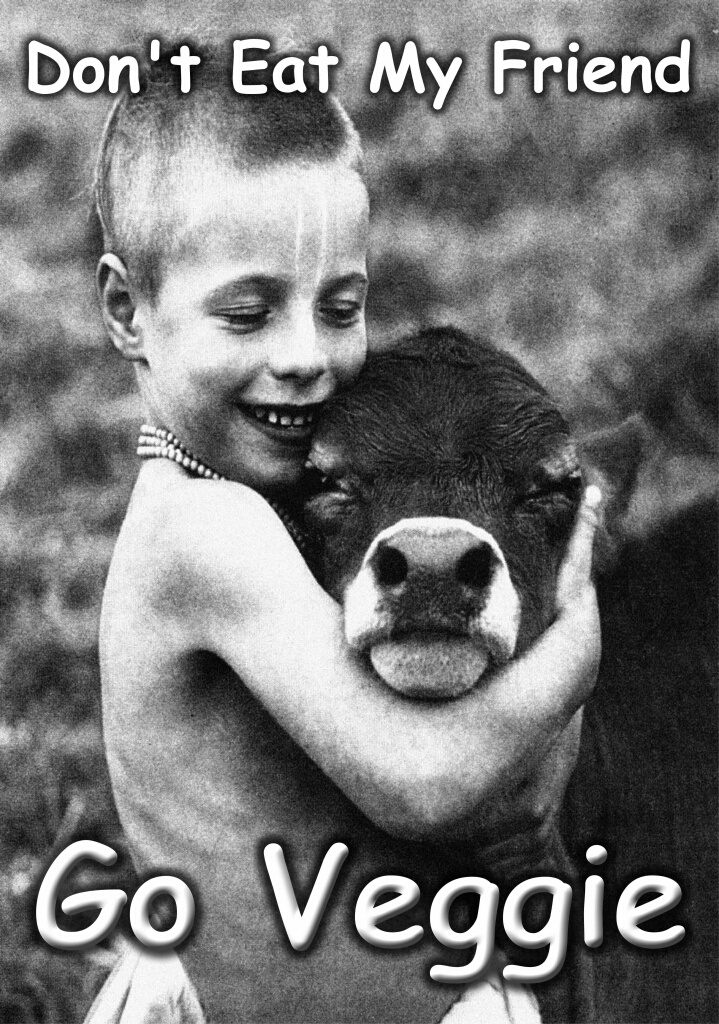
Save Europe's Disappearing Cows, Say Campaigners

Click here to read the full article from Sami Grover at TreeHugger


"Those who would build mega-dairies in Britain may not believe that cows belong in fields, but the majority of the public does. Yet while there's been some success by campaigners fighting specific intensive cattle farms, there does seem to be a steady creep toward larger, more intensive, and indoor-only cattle rearing operations in Europe.
The World Society for the Protection of Animals (WSPA) is about to fight back.

Citing the statistic that 67% of all cows in Denmark never feel the sun or chew a blade of grass, the WSPA is launching a new campaign to save Europe's disappearing cows and keep them out in the open where they belong."


Thursday, November 1, 2012

The 8 Most Interesting Ideas to Revolutionize Urban Farms


Click here to see the full photo essay from Lamar Anderson at The Atlantic Cities


"Today, while the Center for Science in the Public Interest was busy coordinating Food Day events across the nation, we got to thinking about all the delicious plants that will have to grow on buildings if our rapidly urbanizing world is to produce enough sustenance for the projected 9.1 billion people who will need access to fresh food by 2050. Could it really be a coincidence that so many of the causes CSPI addresses—healthy eating, hunger, food security, agriculture policy—find some resolution in the promise of agritecture, farmscrapers, and other utopian portmanteaus? We think not!

As the vertical farming trend has taken off in recent years, many architects and designers have begun tackling the question of how to marry agriculture with architecture. Here’s a look at some of our favorite concepts (most of them un-built) for fanciful food-producing pyramids, geodesic domes, flower pods, and insects."

Sunday, October 21, 2012

The Food Movement Today

Two enlivening, enlightening, and challenging articles from the Food issue of the New York Times Magazine

Click here to read "Land of a Billion Vegetables" from Mark Bittman


"But I was also inclined to head to the valley because I know that, for the last century or so, we’ve been exploiting ­­ — almost without limitation — its water, mineral resources, land, air, people and animals. Mark Arax, a writer who lives in Fresno and has chronicled the region’s past and present, offered his opinion while serving me and a dozen others marinated lamb, a terrific recipe from his Armenian family: “This land and its water have gone mostly to the proposition of making a few men very wealthy and consigning generations of others, especially farmworkers, to lives in the dust.” I’d already seen an example of how wealth has been concentrated and captured in the valley: this summer, Campbell’s bought Bolthouse Farms for $1.55 billion. Meanwhile, there are thousands of valley farmworkers who are often victims of wage-theft and (illegally) required to supply their own tools.

So for five days I drove through the southern half of the valley. I wanted to learn as much as I could about the agriculture in America’s produce factory; where thoughtful farmers were leading it; and how — if at all — it might become sustainable."

Click here to read "Is The Food Movement For Real?" from Michael Pollen


"Clearly there is growing sentiment in favor of reforming American agriculture and interest in questions about where our food comes from and how it was produced. And certainly we can see an alternative food economy rising around us: local and organic agriculture is growing far faster than the food market as a whole. But a market and a sentiment are not quite the same thing as a political movement — something capable of frightening politicians and propelling its concerns onto the national agenda.

California’s Proposition 37, which would require that genetically modified (G.M.) foods carry a label, has the potential to do just that — to change the politics of food not just in California but nationally too.
"